Stay Inside Etosha: All 6 Etosha Rest Camps
Inside the Park
All six rest camps inside Etosha National Park, run by Namibia Wildlife Resorts — with photos, starting prices and where each one sits on the main road.
Stay Inside Etosha: All 6 Etosha Rest Camps
Inside the game fence: you’re at a waterhole at sunrise and can watch the floodlit waterhole after dark.
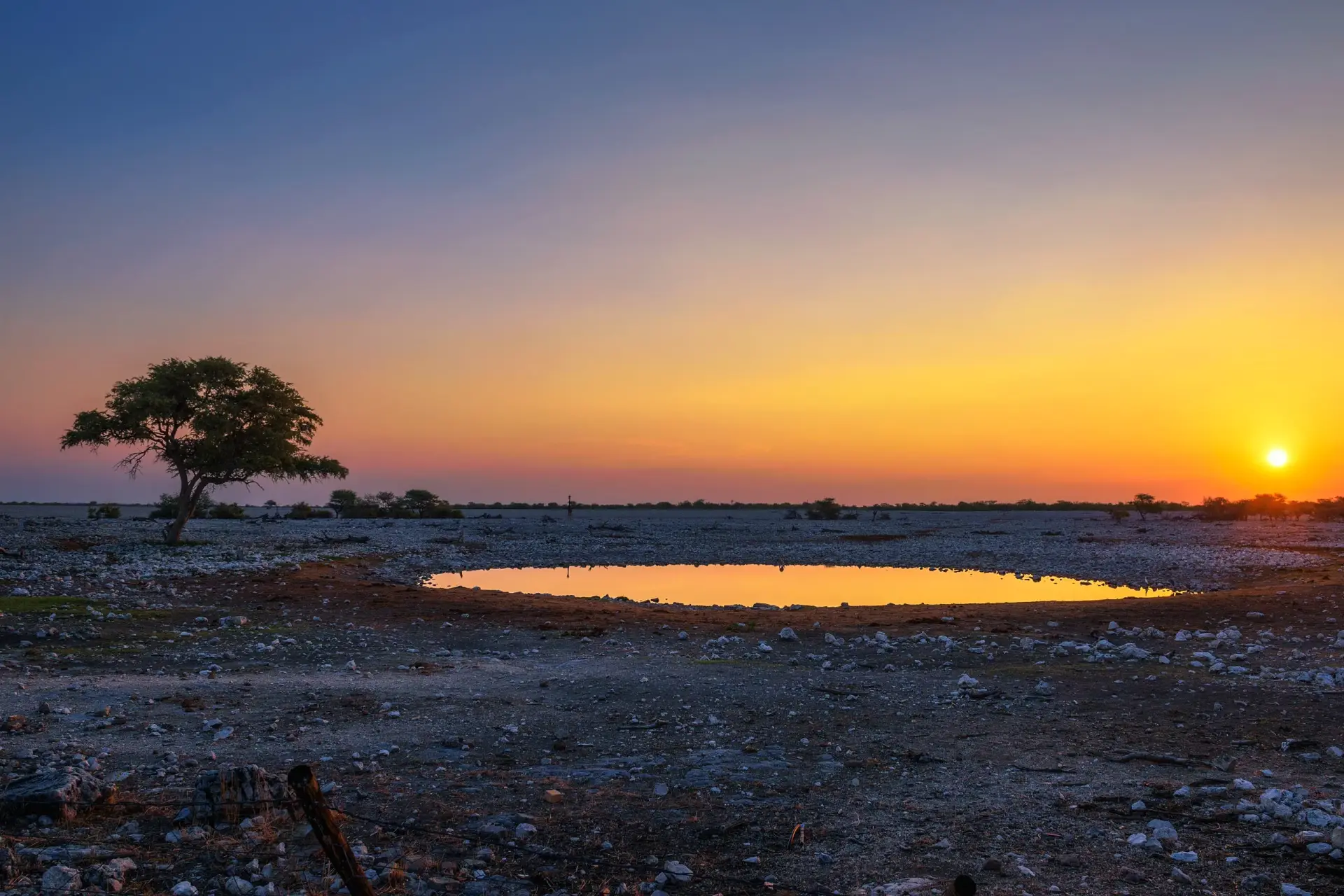 Most popular
Okaukuejo
Floodlit waterhole with nightly rhino. Most services. Best first base.
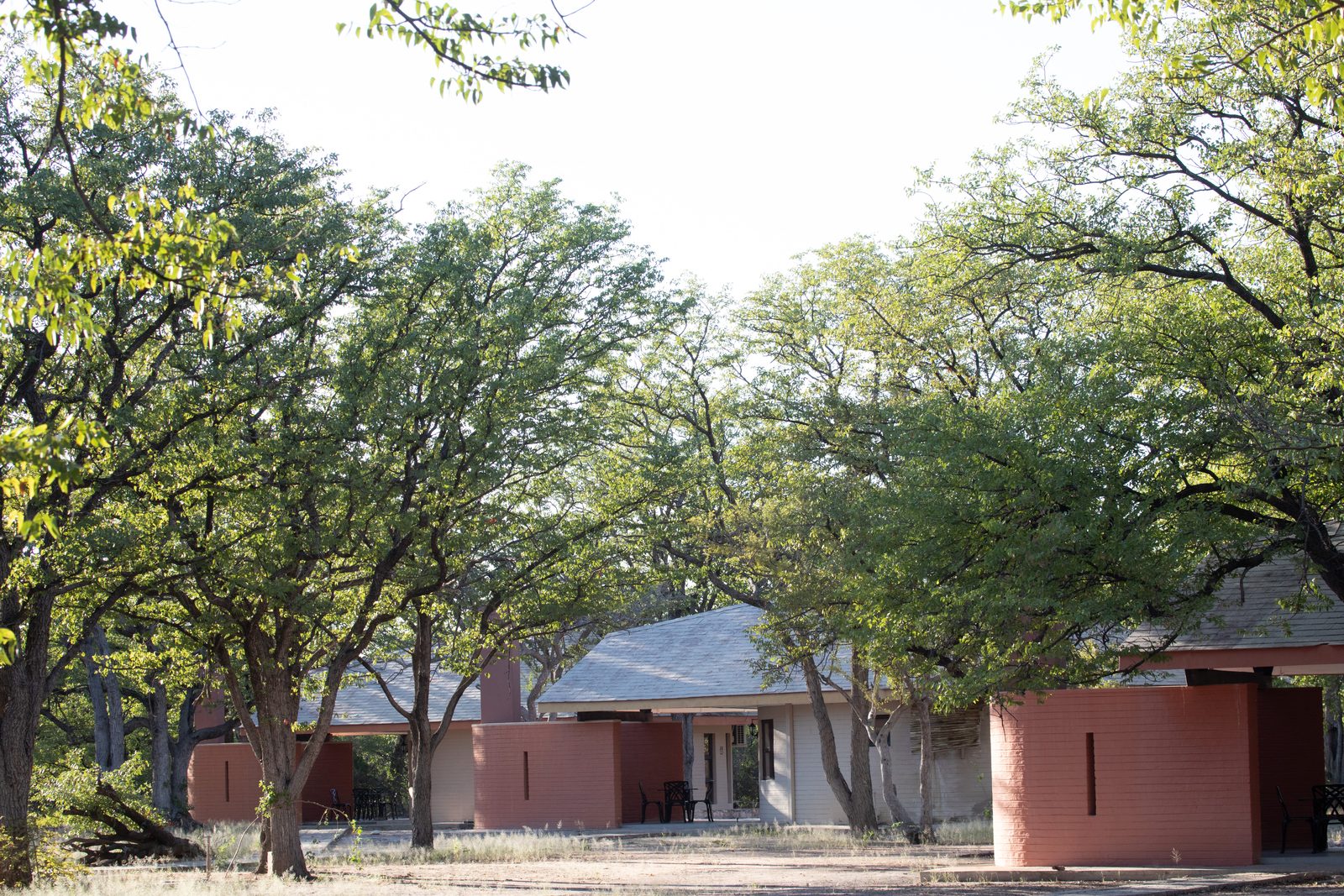
Halali
Quieter, shady, with the Moringa floodlit waterhole. Splits east and west.
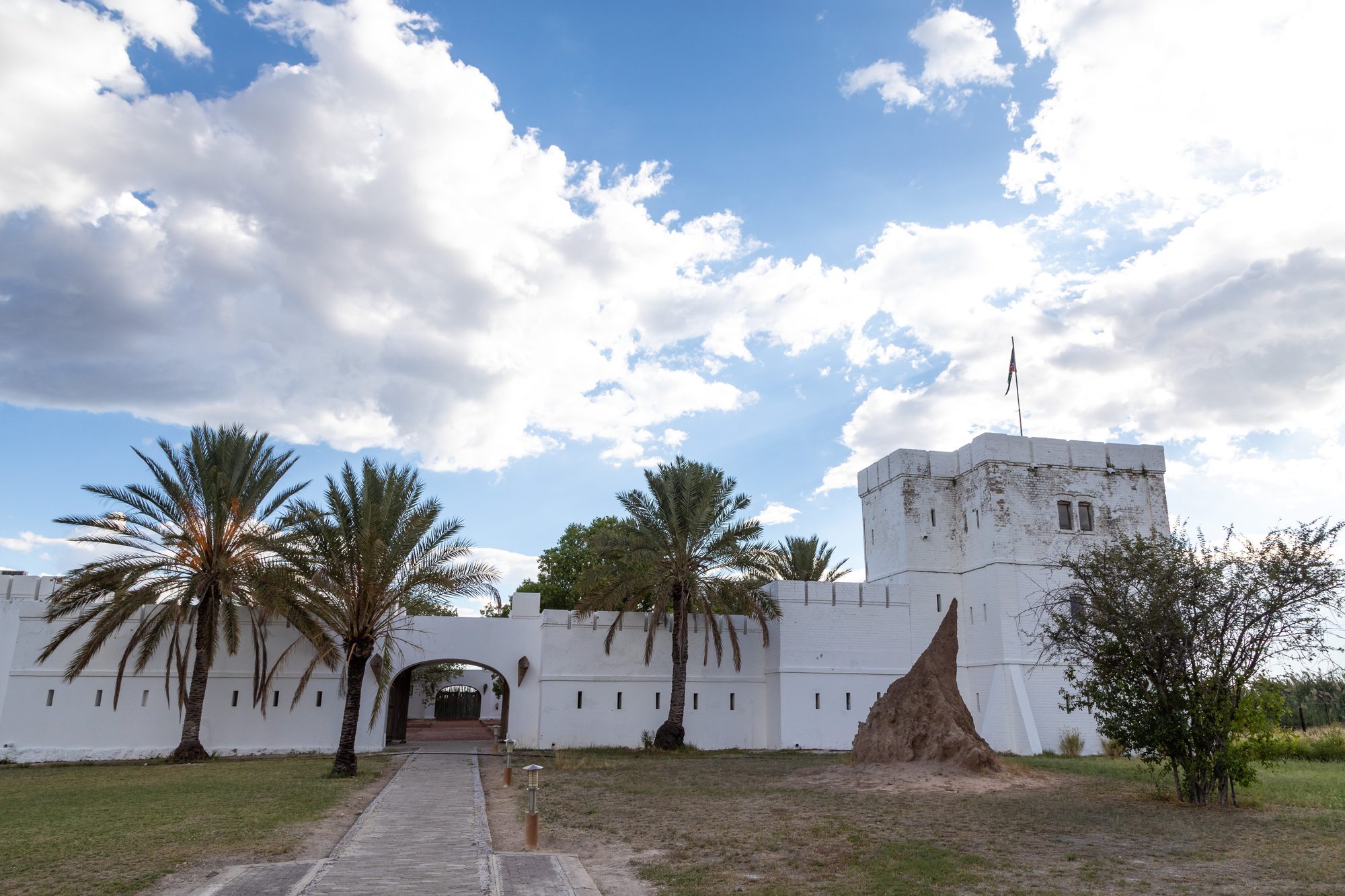
Namutoni
The 1906 fort beside Fischer’s Pan. Birding, leopard and cheetah.
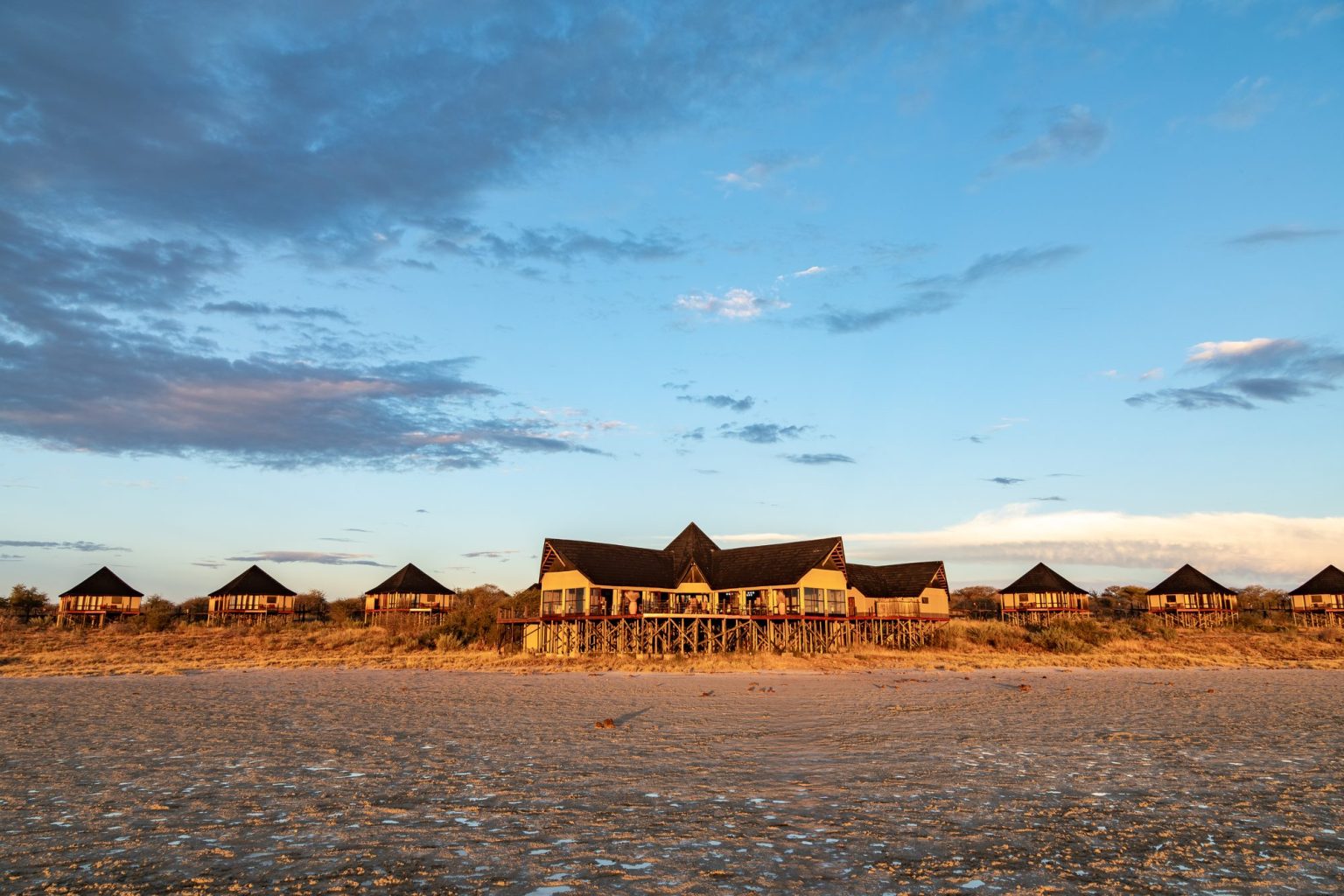
Onkoshi
15 chalets on stilts at the pan rim. No through traffic.
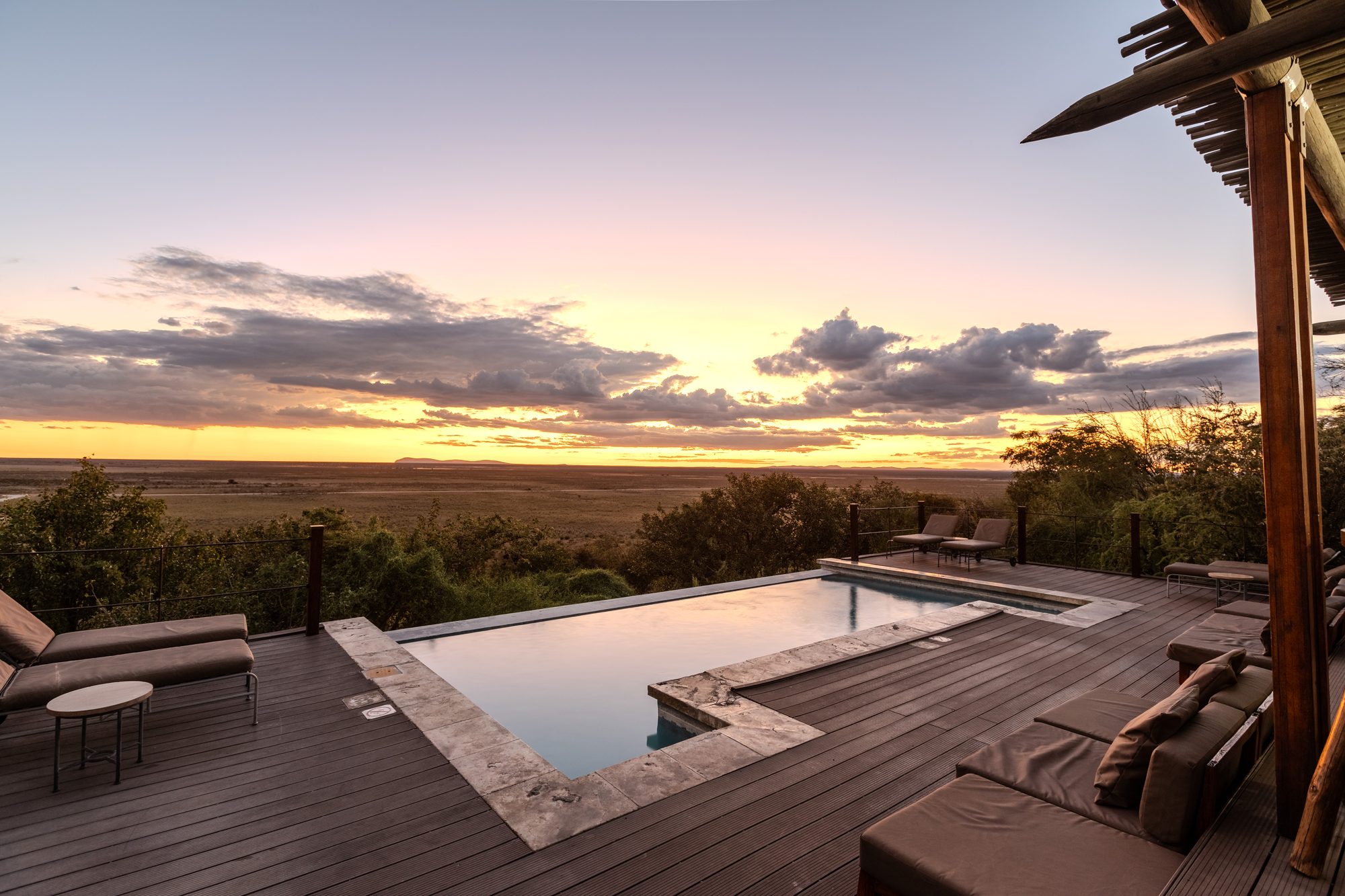
Dolomite
Chalets on a dolomite ridge in the quiet western zone.
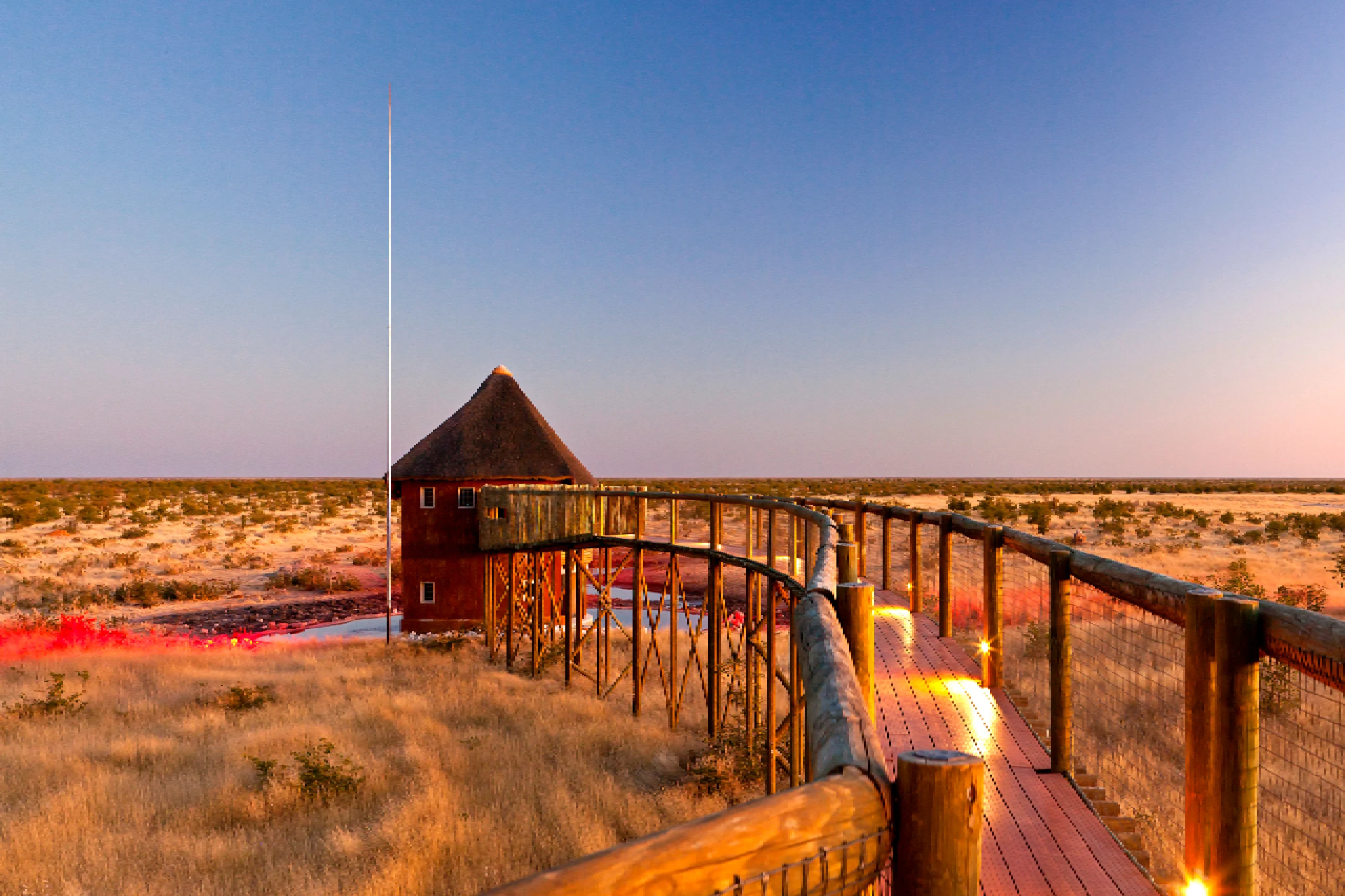
Olifantsrus
Camping only. Two-storey hide over the waterhole.
Pick by route, not just by camp
Etosha is 300 km from west to east. Most visitors enter at Andersson Gate in the south, stay at Okaukuejo, move east to Halali or Namutoni, and leave by Von Lindequist Gate. Two or three camps along that line is the classic trip.
Which camp suits you?
| If you want… | Stay at | Why |
|---|---|---|
| Your first visit, easiest option | Okaukuejo | Floodlit waterhole, fuel, shop, tar road to the gate |
| Somewhere quiet and central | Halali | Halfway between west and east |
| Birds, history, the eastern side | Namutoni | Fischer’s Pan wetland, the old fort |
| A special night for two | Onkoshi or Dolomite | Small, remote, views over the pan or plains |
| Camping on a budget | Olifantsrus, or any campsite | Camping from NAD 460–510 pp |
| Comfort, pool, good food | A lodge outside the park | Pair it with a night or two inside |
We’ll tell you what’s open
Inside or outside, camping or chalet — the honest answer depends on when you’re coming and what’s still free on those nights. Send your dates and we’ll come back with what’s available across all of them.
- 1You send your datesTakes about a minute.
- 2A person replies within one business dayWith live availability and one clear recommendation.
- 3You approve a written quoteOnly then is a 30% deposit requested.
Prefer to talk? WhatsApp us or call +264 81 277 6560.
Everything Inside Etosha National Park
The 22,270 km² inside Etosha
Etosha National Park occupies 22,270 km² of north-central Namibia, roughly the size of Switzerland. The park is built around the Etosha Pan — a 4,800 km² salt pan often visible from space, which gives the park its name (Etosha means “Great White Place” in Oshindonga). Around the pan, the landscape shifts between mopane woodland in the north-east, grassy plains in the west, camelthorn savanna in the south, and dolomite hills in the north-west.
The six rest camps
Okaukuejo (south-central) is the park headquarters and the only camp with a floodlit waterhole hosting nightly black rhino, elephant and lion visits. Halali sits midway with a quiet Moringa waterhole famous for leopard and rhino. Namutoni, the easternmost camp, is built around the 1902 German fort near Fischer’s Pan birding loop. Onkoshi is the most exclusive — 15 chalets elevated over the pan. Dolomite Resort opens the western wilderness with 20 chalets. Olifantsrus is camping-only in the western sector.
The four public gates
Andersson Gate (south-west) is the busiest entry from Windhoek via the C38. Von Lindequist Gate (east) receives traffic from the B1. King Nehale Gate (north; officially Nehale lyaMpingana Gate) opens to the Ondangwa-Oshakati corridor. Galton Gate (far west) is the entry to the Dolomite/Olifantsrus western sector.
The main road loops
The park’s internal gravel-road network totals about 800 km. The main southern loop (Okaukuejo to Halali to Namutoni) is the high-sighting spine. The eastern loop around Fischer’s Pan is a birder’s circuit. The western sector (Dolomite-Olifantsrus-Galton) is wilder and excellent for lions, black-faced impala and Hartmann’s mountain zebra. Speed limits: 60 km/h on main roads, 40 km/h inside camps.
30+ named waterholes
Signature waterholes include Okaukuejo (floodlit rhino/elephant/lion at night), Nebrownii (elephant herds), Gemsbokvlakte, Olifantsbad, Rietfontein (lions), Goas, Halali waterhole (leopard), Klein Namutoni (silent-code zone), and Chudop (giraffe, rare roan).
Wildlife inside the park
Etosha hosts an estimated 500+ black rhino (one of Africa’s most significant populations), 300-400 lions, 2,500 elephants, 300+ leopards, and 114 mammal species overall. 340 bird species, including 35 raptors. Four of the Big Five (no buffalo). Endemic species include black-faced impala, Damara dik-dik, and Hartmann’s mountain zebra.